What Does It Actually Mean to Be a Godly Father?
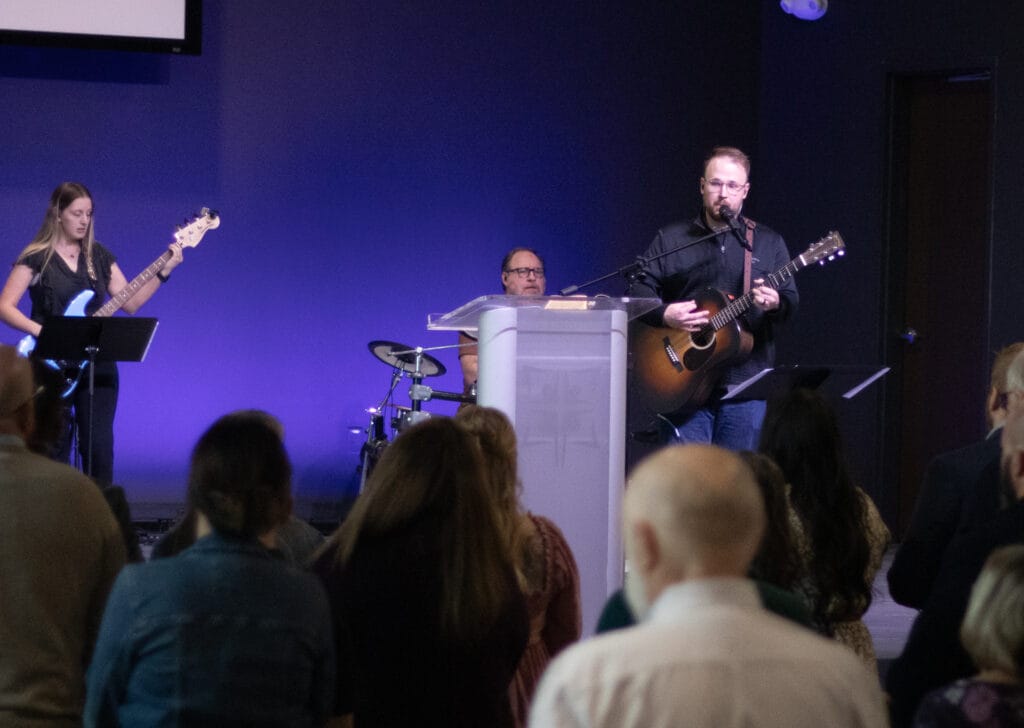
Father’s Day has a way of bringing out both gratitude and guilt in the same breath. Sunday morning at Community Baptist was no different. Before Pastor Mike even opened Ephesians 6, he opened with something more personal — his own regrets. “I did not know what to expect for my children and I really had unrealistic demands on my children. And I regret that to this day.” That kind of honesty from the pulpit has a way of making the room lean in.
The morning’s scripture reading came first from Deuteronomy 6 — the Shema — where Moses commands Israel to love God with everything they have and then to talk of him constantly: when you sit, when you walk, when you lie down, when you rise. That passage set the table for what Ephesians 6:1-4 would serve: a job description for fathers that is both simpler and more demanding than most of us expect.
What Fathers Are Not to Do
The first word to fathers in Ephesians 6:4 is a negative: “do not provoke your children to anger.” The parallel passage in Colossians 3:21 adds the consequence — “lest they become discouraged.” Pastor Mike was clear that provoking isn’t just explosive anger. It’s the pattern of unjust punishment, unrealistic expectations, neglect, over-protection, and failing to sacrifice. He brought in David and Absalom as a sobering example — a father so absent that the damage was irreversible.
The milk-spill illustration landed quietly in the room: a child accidentally spills their drink, and a father erupts. “That situation isn’t about the child,” he said. “It’s about the anger in a father’s heart.” God never disciplines out of irritation or loss of control — God disciplines because he loves. That’s the standard. Not perfection, but a love that looks like the Father we read about throughout Scripture.
What Fathers Are Called to Do
The second half of verse 4 doesn’t leave fathers with just a prohibition. It calls them to “bring them up in the discipline and instruction of the Lord.” Pastor Mike broke those two words apart carefully. Discipline implies structure, authority, correction — not to display displeasure, but to bring children back to the right path. Instruction carries a different weight: think encouragement, communication, modeling, love.
And the goal of all of it? He asked the question directly: “Is it to raise children who can function well in society? Is it to raise polite and well-educated and successful children?” His answer: “According to the Bible, the goal is way beyond this. The goal is one word: it’s discipleship.” He returned to Deuteronomy 6 to make it concrete — talk about Christ at the dinner table. Walk through life and point to God. Read a verse. Pray together. “That’s discipleship,” he said, “and that’s what God has called us to.”
Why Any of This Matters
The message didn’t end with a to-do list. It ended with the reason behind all of it — Ephesians 3:10, where Paul writes that through the church, “the manifold wisdom of God might now be made known to the rulers and the authorities in the heavenly places.” Fatherhood, marriage, the church — all of it exists so that God might be glorified. As Ephesians 3 closes: “to him be glory in the church and in Christ Jesus throughout all generations forever and ever.”
He closed the message the way he opened it — with grace. “I don’t care in all the effort that you try, we will fail and we will fail miserably. But when we stand before the Lord and we acknowledge, Lord, I can’t do this… God resists the proud, but he’ll give grace to the humble.”
Discussion Questions
- In what ways might you be provoking your children — or others in your care — without realizing it? What would it look like to replace that pattern with gentleness and patience from Ephesians 4:2?
- Pastor Mike described discipleship as simply talking about Christ at the table, on walks, in everyday moments (Deuteronomy 6:7). What would that look like practically in your home this week?
- Ephesians 3:10 says the church exists to display God’s wisdom — even to heavenly realms. How does that vision change the way you think about your role as a parent, a spouse, or a member of this church?
If you were in the room Sunday, we hope this brings the morning back to you in a useful way. If you weren’t, know that this is the kind of church where a pastor will tell you about his own failures before he tells you what the Bible expects — because the goal here has never been guilt. It’s been grace. We’d love to have you join us.