Seeing People the Way Jesus Does
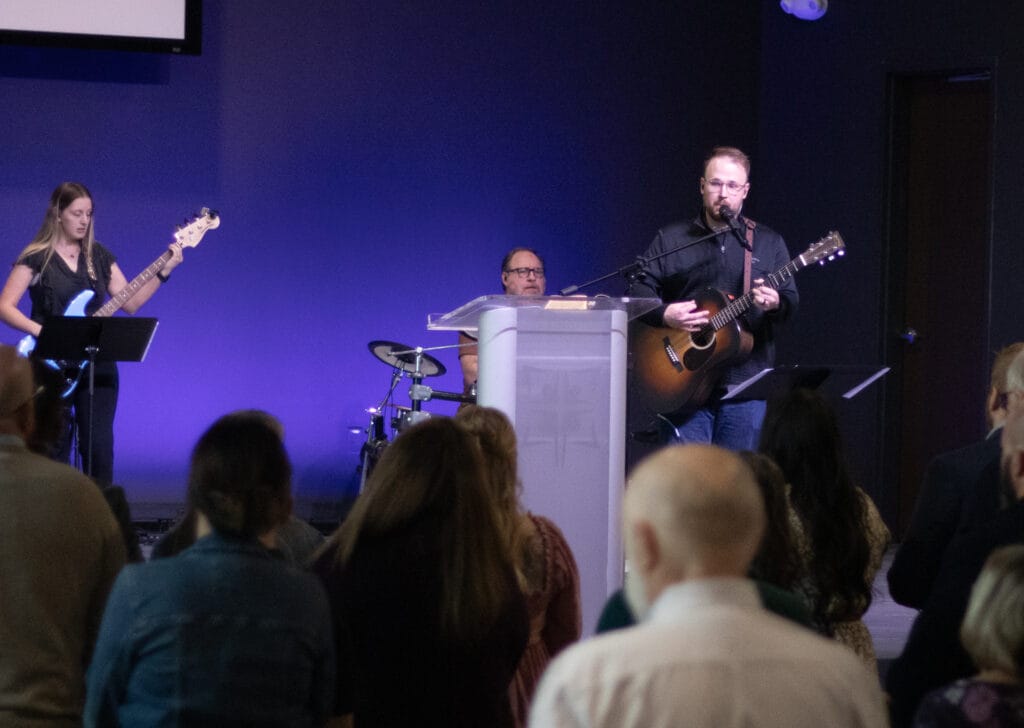
What does it look like to see the world through Jesus’ eyes? That’s the question at the heart of this week’s sermon. In a season of change — as Community Baptist sends a team to plant Northside Church just down the road — Pastor Dan brought us back to the simplest and most clarifying question we can ask: How did Jesus view people? And more personally, how should we?
The answer comes into focus in Mark 2:13-17, where Jesus walks beside the sea, teaches the crowd that gathers around him, and then stops to call a tax collector named Levi to follow him. That same Levi would later write the Gospel of Matthew. From the crowd to the individual to the dinner table full of outcasts, Jesus modeled a way of seeing people that turned the religious assumptions of his day completely upside down.
Jesus Saw the Crowd — and Served Them Anyway
When Jesus went out beside the sea, a crowd came to him. He knew that not everyone following him was a true believer. Some wanted miracles. Some wanted a meal. Some had no interest in his message at all. And yet, “Jesus served the crowd. He didn’t just say, all of you who are true believers, come. Everyone else, don’t listen.” He taught them. He cared for them. He gave himself to them anyway.
That’s a challenge for us. It’s easy to grow tired of people who seem to want something from us without really wanting the gospel. But Jesus modeled a patient, open-handed generosity toward the crowds — and calls us to do the same in our workplaces, our neighborhoods, and our schools.
Jesus Saw the Individual
What makes this passage remarkable is that Jesus didn’t only see the crowd. As he passed by, he saw Levi — one specific person — sitting at the tax booth. Levi was a Jew collecting taxes for the Roman government. To his own people, that made him a traitor and an outcast.
Pastor Dan pointed to Michelangelo’s famous words about seeing a statue already finished inside a block of marble. “That’s the picture I get that Jesus saw in Levi — what most of us couldn’t see.” Where others saw a collaborator with the enemy, Jesus saw someone worth calling. Someone worth transforming. He didn’t see Levi for his employment, his reputation, or how he made other people feel. He saw the person — and who that person could become.
“Follow me,” Jesus said. And Levi arose and followed him.
Jesus Sat Down with Sinners
The scene shifts quickly. Jesus is now at Levi’s table, reclining with tax collectors and others the text calls “sinners” — not just in the theological sense, but people who were known to be living outside the expectations of Jewish life. Outcasts eating with outcasts. And Jesus was right there among them.
The scribes and Pharisees watched from a distance, scandalized. “Why does he eat with tax collectors and sinners?” They believed that spiritual faithfulness meant separating from people like this. But what their question actually revealed was pride — the assumption that they didn’t need what those people needed.
Jesus answered them plainly: “Those who are well have no need of a physician, but those who are sick. I came not to call the righteous, but sinners.” The self-righteous, those who believe they have it figured out, those who don’t think they need saving — Jesus said those aren’t the ones he came for. He came for the broken. The ones who know they’re broken. The ones who are desperately in need of grace.
The View We’re Called To
It’s easy to look at people and see only what they offer us — their usefulness, their likability, their political views, how easy or difficult they are to love. Pastor Dan challenged us to see people the way Jesus did: as image bearers of God who need a relationship with the one who saved us. Not as projects. Not as problems. As souls.
That vision holds whether we’re here at Community, serving the mission in Spring Hill, or whether God is leading us further south to Northside. The calling is the same: go out, see the crowd, see the individual, sit down with people, and share the life-changing hope of the gospel.
Scripture References
- Mark 2:13-17 — Jesus calls Levi and eats with tax collectors and sinners
- 1 Thessalonians 4:13 — Believers grieve differently because of the hope of Christ
Discussion Questions
- Think about the people in your daily life — coworkers, neighbors, acquaintances. Who might you be overlooking the way the Pharisees overlooked Levi?
- Is it harder for you to engage the crowd or to slow down and see the individual? What might Jesus be calling you to practice more intentionally?
- The Pharisees kept their distance from “sinners” out of pride and self-righteousness. In what ways might pride keep us from sitting down at the table with people who need the gospel?
We all have a natural way of seeing people — filtered through comfort, familiarity, and what serves us. But Jesus invites us into a different kind of sight. May our prayer this week be simple: Lord, let me see people the way you do. Let your point of view become mine. And may the goodbyes we face — in any season — remind us that in Christ, no goodbye is final.