When the Church Needs Its Own Magnificent Seven
Back in October of 1960, a Mexican village terrorized by a ruthless outlaw named Calvera couldn’t defend itself, so the townspeople did the only thing they could: they went looking for help. They found seven skilled gunslingers willing to train them, fight alongside them, and stand against the tyrant threatening everything they had. My grandmother watched that movie, The Magnificent Seven, on reruns in her single wide trailer more times than I can count, and I never imagined it would end up helping me explain a passage of Scripture to you. But stay with me, because by the end it makes sense.
What I want you to see this morning is that the church has always needed its own magnificent seven, people set apart to serve so that leaders can lead and the mission doesn’t get derailed. Paul lays out exactly who those people are in 1 Timothy 3:8-13, and then we get to watch it actually happen in Acts 6:1-7. My thesis is simple: a deacon must practice what he preaches, and when a church gets that right, “the gospel just keeps moving.”
What Makes a Deacon
Paul doesn’t leave us guessing. A deacon is “an approved assistant to the elders,” someone who carries the physical tasks of ministry so pastors can stay devoted to teaching, preaching, and equipping the saints. Verse 8 gives us the list, and I walked through it one qualification at a time: dignified, not double-tongued, not addicted to much wine, not greedy for dishonest gain. “Their yes is yes and their no is no.” They’re not skimming from the offering, not leaving a little in their pocket when they’re asked to distribute to those in need.
Verse 9 adds that they must “hold the mystery of the faith with a clear conscience,” which simply means a deacon must practice what he preaches. And verse 10 reminds us this isn’t a one-time stamp of approval: “there’s an ongoing evaluation of this person.” I said it plainly, “sadly, you can have to put down another… sometimes you’ve got to get them out.” It matters. It’s not just a title we hand out.
Verse 12 brings us to faithfulness in the home, husband of one wife, managing his household well. “He’s not somebody that when he’s at church he’s one way but when he’s at home he’s a totally different person.” And when a man lives this out consistently, verse 13 tells us what it produces: a good standing and great confidence in the faith. I can take constructive criticism from a man like that, because “he’s coming to me out of the genuineness of his heart.”
The Problem Behind the Magnificent Seven
In Acts 6, the early church is growing fast, and Gentiles and different ethnicities are now part of the body. But a complaint arises: the Hellenistic widows were being neglected in the daily distribution while the Hebrew widows were cared for. What was really going on here? “You could say we see the concept of bigotry. We see the concept of prejudice going on.” People who looked different, sounded different, worshiped a little differently were being overlooked, and the church was dangerously close to making that a permanent policy.
I asked the room plainly, is it possible for people in a church to act in a way that excludes others because they don’t look the same? Paul answers that question for us in Galatians 3, “there is neither Jew nor Greek, there is neither slave nor free, there is neither male or female… for you are all one in Christ Jesus.” To have division because someone doesn’t look like me, sound like me, vote like me, “it is not biblical.” We’re family, and yes, sometimes Uncle Pookie and Uncle Ray Ray don’t get along, but it shouldn’t be that way here.
How the Leaders Responded
Here’s what I love about this passage: the apostles didn’t let the issue become bigger than the mission. They said plainly, “it is not right that we should give up preaching the word of God to serve tables.” So they told the church to pick out seven men, full of the Spirit and of wisdom, and hand them this responsibility. Notice something, all seven names are Greek names. The church didn’t just acknowledge the problem, they put Hellenistic men in charge of caring for Hellenistic widows. These men “upheld the standard, which is God’s word more than they did people’s opinion.” And the result? “The word of God continued to increase… and a great many of the priests became obedient to the faith.”
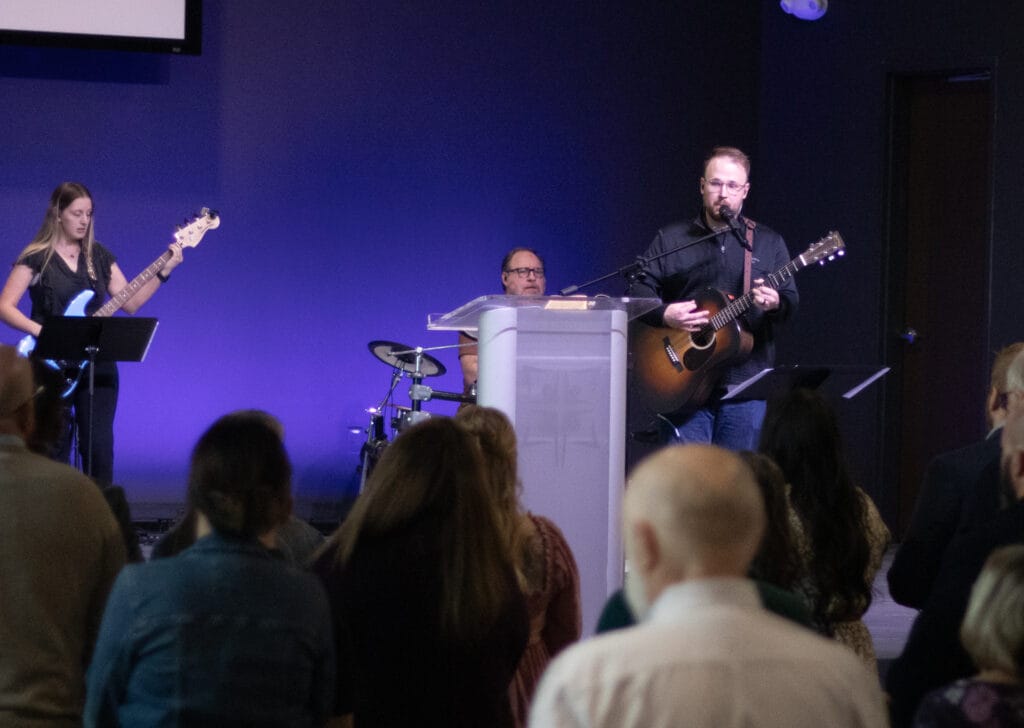
That’s why today we introduced our own magnificent seven, men like Ethan Dower, Dustin Green, Ben Parker, Will Rooks, Aaron Smith, Bob Smith, and Tyler Knapp, trusted and tested, standing ready to serve this church so the mission doesn’t get derailed by inward pettiness.
Discussion Questions
- Of the qualifications listed in 1 Timothy 3:8-13, dignified, not double-tongued, faithful in the home, which one do you find hardest to live out consistently, and why?
- The Hellenistic widows were overlooked because they didn’t look or sound like the majority. Where might presumptions like that quietly show up in our own church family today?
- The apostles said “it is not right” for them to neglect preaching to serve tables, so they delegated. Where in your own life do you need to trust someone else with a task instead of trying to carry it all yourself?
As I prayed over our deacons this morning, I asked God for one thing above all: that we would leave here looking to love one another well, the way He has loved us. If you were here today, pray for these men, they need it as much as we do. And if you’re reading this somewhere else, wondering whether a church like this has room for someone who doesn’t look, sound, or vote like everyone else, I promise you, in Christ there is neither Jew nor Greek, and there’s a seat for you here too.