When Everyone Stays Silent, What Does That Silence Cost?
What’s your favorite song, the one you know so well you could still sing it in your nineties? Songs teach us things, they stay with us long after the moment that gave birth to them. In the book of Isaiah there are four such songs, servant songs written about a coming Messiah, and the last one was sung seven hundred years before a cross ever stood on a hill outside Jerusalem. Yet it reads like someone was standing at the foot of that cross, watching it happen in real time.
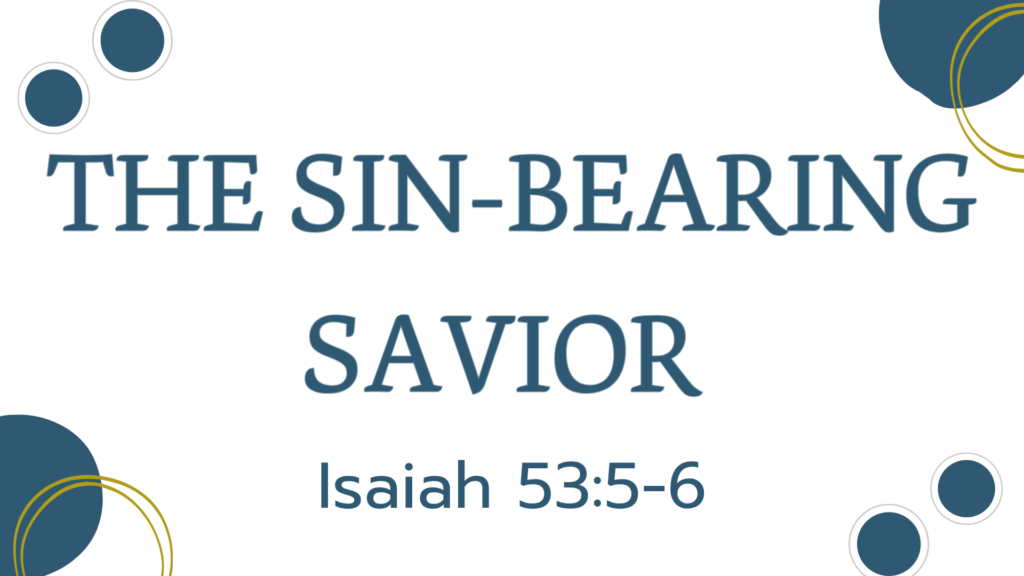
As I opened Isaiah 53 this morning, I wanted us to sit with one question that the text itself asks: who shall declare? The heart of this message is simple but it should stop us cold, “He was oppressed and he was afflicted, yet he opened not his mouth.” This is the gospel according to Isaiah, and in it we find our sin, our judgment, and the sacrifice God provided long before we ever needed it.
The Silent Lamb
Verse 7 tells us what He suffered. The word for oppressed is the same word used for the taskmasters who drove Israel as slaves in Egypt, brutal, relentless. He was afflicted, pressed down, dealt with harshly, “led to the slaughter like a lamb on its way to the altar.” Isaiah 52:14 tells us His appearance was “so marred beyond human semblance.” John the Baptist later looked at this very man and said, “Behold, the Lamb of God, which takes away the sins of the world.”
I asked the room this morning, if you were accused of a crime and you were innocent, how would you respond? You’d speak up. You’d defend yourself. You’d cry out for justice. But our Savior, innocent in every way, remained silent. Meanwhile we, the guilty ones, are the ones called to cry out, like David did in Psalm 51, “blot out my transgressions, wash me thoroughly from my iniquity.”
The Silent Courtroom
Verse 8 takes us somewhere even quieter than the slaughter, into a courtroom where silence is louder than any verdict. “By oppression and judgment he was taken away.” Jesus went through six trials, three Jewish and three Roman, and every rule of a fair trial was broken. They met at night. They hunted for false witnesses who couldn’t even agree with each other. Pilate said it plainly, “I find no fault in him,” and still handed Him over.
Through it all, “he gave him no answer, not even a single charge, so that the governor was greatly amazed.” The word translated “considered” in verse 8 means to think something through and then speak up about it. In some translations it’s rendered, who shall declare his generation? Nobody did. His own disciples fled. The only two who spoke up, Joseph of Arimathea and Nicodemus, didn’t say a word until after He was already dead. No one thought to speak up for Him, because He was stricken for the transgressions of my people.
Jesus told us Himself in John 10:18, “No one takes it from me, but I lay it down of my own accord.” This wasn’t a victim caught off guard. This was a Savior who went to the garden, anguished, and still prayed, “not as I will, but as you will.” He stood under judgment in your place and mine. Romans 3:19 says it plainly, every mouth is stopped, the whole world is held accountable. We don’t get to walk into God’s courtroom and argue our case. We are Barabbas. We were the guilty ones set free, and the sinless one took our cell.
A Song Without Music
We started by talking about the songs we carry with us our whole lives. The world sings plenty of songs, but the church sings one: about the Lamb who was slain for us. Paul calls the Lord’s table exactly this kind of declaration in 1 Corinthians 11:26, “for as often as you eat this bread and drink the cup, you proclaim the Lord’s death until he comes.” That word proclaim means to announce publicly. Every time we come to this table, we are the ones finally declaring what His generation refused to say.
Discussion Questions
- Isaiah 53:7 says Jesus “opened not his mouth” even though He was innocent. When have you felt the pull to defend yourself, and what would it look like to trust God with your vindication instead?
- In the six trials Jesus faced, no one spoke up for Him, not even those closest to Him. Is there a time you stayed silent when you should have spoken up for what was right?
- Communion is described as “a song without music,” a public proclamation of Christ’s death. What does it mean for you personally to “declare” Jesus at the Lord’s table this week?
So I’ll leave you with the same question I left our church with this morning: what sin do you need to cry out to God about? Where is the love and gratitude due to the silent one who took your place? If you’ve never trusted Him before, or if it’s simply been a while since you let that truth sink all the way in, you are welcome at this table and in this church, every single Sunday. He was silent so that your sins would not have the final word.