The Day of the Lord: Judgment and a Humble Remnant
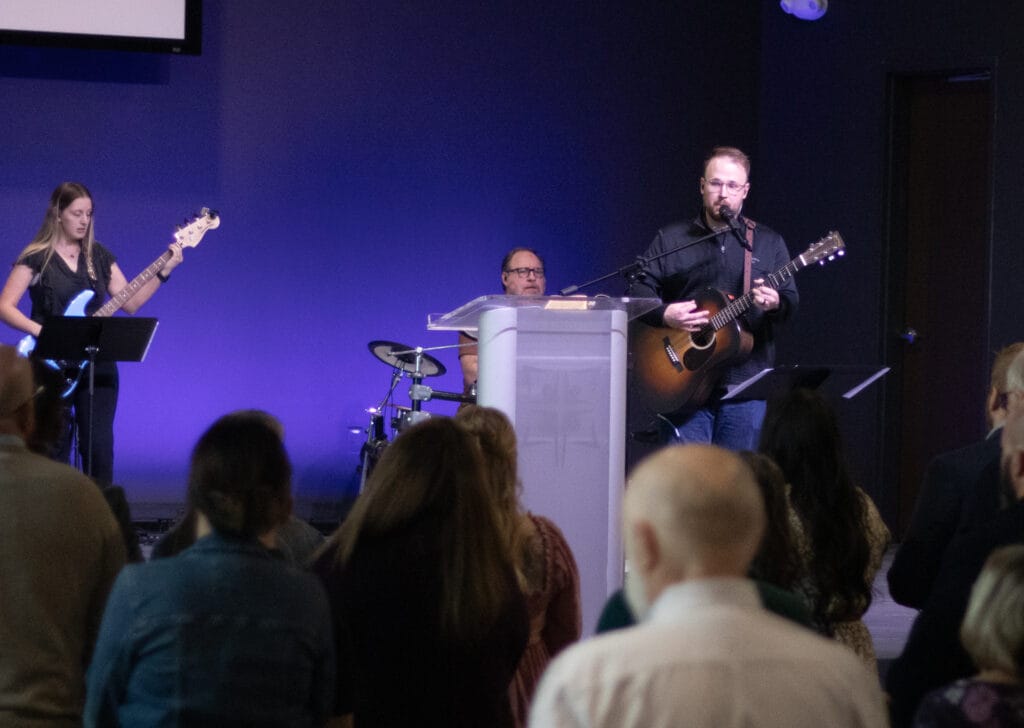
Zephaniah is a short book of three chapters, and it can get very heavy, because it is about the coming judgment on our world for sin and disobedience. But as we sang that morning, the end is written. For those of us who are redeemed, the heaviness of the judgment is there, but we have hope. The main theme of the book is the day of the Lord, and it has two parts: the coming judgment on the disobedient, and the blessing on the remnant of God’s people.
An Eight-Year-Old King
Zephaniah opens with a genealogy that most prophets do not give, showing he was the great great grandson of Hezekiah, the last godly king. That gave him influence with Josiah, the current king of Judah. Imagine being Josiah. You are eight years old, your father Amon has been king for two years and has just been assassinated, and you are thrust on the throne. Who do you look to? Your father was evil. Your grandfather Manasseh was wicked. Hezekiah is dead. All he knew was that he wanted to be better. Second Chronicles 34 says “he did what was right in the eyes of the Lord and He Walked In the ways of David his father and he did not turn aside to the right hand or to the left.” At 16 he began to seek God, and at 20 he purged Judah of its high places and idols. At 26 the book of the law was found in the temple, and Josiah wept and repented. It was during this time that Zephaniah prophesied.
Judgment on Judah
In chapter 1, God says he will sweep away man and beast, a very different language from the “it is good” of creation. Then he turns to Judah. He names three kinds of people: those who worship false gods like Baal and Milcom, those who worship the Lord and other gods, and those who are complacent and say the Lord will not do good or ill. God does not accept mixed worship, because “the greatest thing to God is his name and his glory.” I probably fall into the complacent category more than any other. It is easy to sin and see no immediate consequence, and conclude God does not care. But Zephaniah says “you cannot be complacent with your attitude towards him and your obedience towards him.” Babylon was coming, perhaps 10 to 20 years out, and he pleads with the people one last time to repent.
Judgment on the Nations
In chapter 2 God judges Judah’s neighbors: the Philistines, Moab and Ammon, who will become like Sodom and Gomorrah for taunting his people, the Cushites, and Assyria with its capital Nineveh, the great city of Jonah. Jerusalem is judged in chapter 3 because the city “listens to no voice” and “accepts no correction.” Her officials were roaring lions, her judges evening wolves, her prophets treacherous, and her priests profaned what was holy. Verse 8 says a day is coming when God will gather the nations and pour out his burning anger.
The Purifying Fire
Then in verse 9, Zephaniah turns. God’s anger is not like ours, which we sometimes just need to get out. “It’s not simply destructive it’s purifying refining fire and what it leaves in its wake is beautiful.” Judgment and blessing are “never apart never one without the other.” God will change the speech of the peoples to a pure speech. I take that to mean inward cleansing from sin, shown in our lips, and not a return to one language. He will remove the proud and leave a people humble and lowly who seek refuge in the Lord. And then the book ends in singing: “the Lord your God is in your midst a mighty one who will save he will rejoice over you with gladness he will quiet you by his love he will exalt over you with loud singing.”
Who Is the Remnant?
Zephaniah gives us the marks of the remnant. They are not mixing their worship. They seek and follow the Lord, are not complacent, obey his commands, seek righteousness and humility, and mourn for the festival. That last phrase means grieving the loss of the place where they worshiped God, as one commentator described. “The Lord is not slack concerning his promises.” So often we seek safety in other things instead. We are to be “a repentant remnant of God’s people.”
The Gospel in Zephaniah
Apart from Christ, we can expect God’s fiery judgment. But Jesus took God’s judgment that was to be poured out on us. “He took our judgment he took our shame he took our guilt and our sin and he bore it himself.” Because of that we are no longer destroyed but renewed. Nothing we can do could ever amount to anything to bring us to God, but Jesus can.
Discussion Questions
- Josiah wanted to be better than his father and grandfather, and God honored that. What do you want to do differently from what was modeled for you?
- Zephaniah describes people who mix their worship, and those who are complacent. Which is the harder one for you, and why?
- God’s fire purifies as well as judges. Where might he be refining something in you that feels like a loss?
If you have trusted Jesus, you have a hope and a future, and God will preserve you to the end. And if you have never trusted Christ, I beg you to repent, because you cannot save yourself. Only he can.