Remember What God Has Done
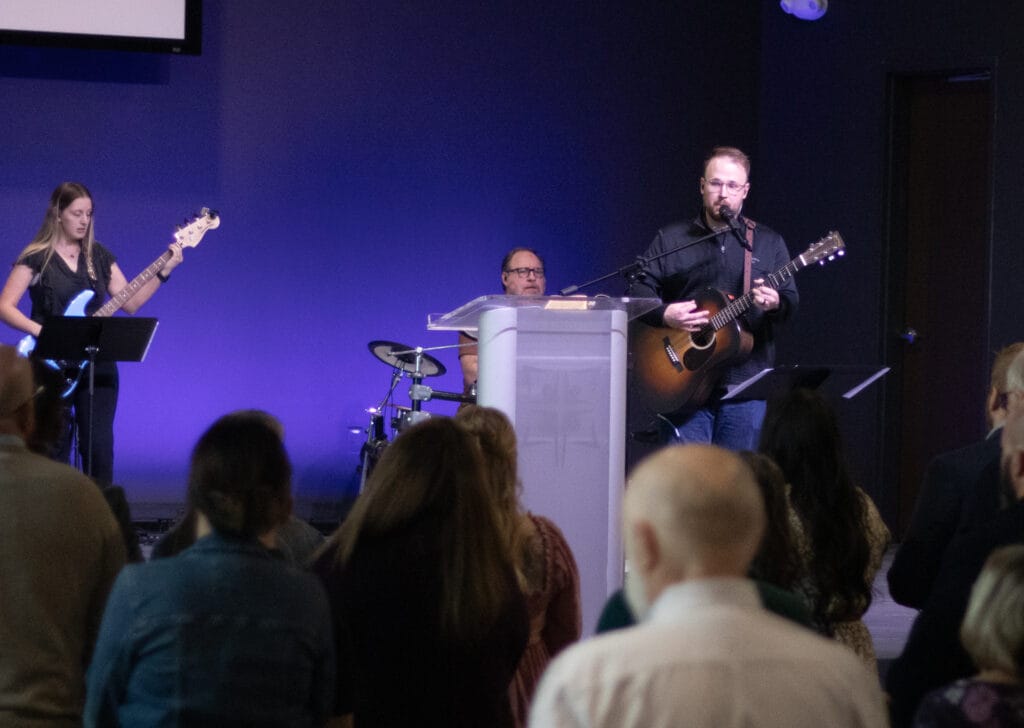
What does it feel like to be in trouble? I don’t mean trouble you caused, though that may be part of it. I mean any trouble. Psalm 77 talks about that, and the whole psalm leads us into communion. The reason we celebrate the Lord’s table, “the reason we do what we call sometimes the Lord’s table or the Lord’s Supper we have different names for it is to remember.” Before the message, we prayed for one of our worship team members who had left the platform for the ER with chest pain, and for his family. The psalms are comforting because they get down to real life.
It Doesn’t Seem to Work
The psalmist is Asaph, and he is struggling. Notice that about halfway through, the psalm shifts from I, me, and my to you and your. We need to see why, because “we need to remember what God has done for us.” In the first nine verses the psalmist “does everything right and yet it doesn’t work.” He cries aloud to God and expects God to hear him. He seeks the Lord in the day of trouble, and his hand is stretched out all night. But verse 2 ends with “my soul refuses to be comforted.” When he remembers God he moans, and when he meditates his spirit faints. He is doing the right things, so why is it not bringing joy and peace?
I had a conversation with some parents this week about their son’s two hospital stays. In both, doctors found the problem and fixed it. The difference was the nurse. The first told them she preferred sedated patients, which is a little creepy when your child is in the hospital. The second time the nurses obviously cared for him and for the parents. The attitude changed the whole stay. It was the same hospital and the same results, but a different experience. Asaph is working on the same issue: is God on my side? Does he care?
The psalm likely comes from an exile, when Israel was overtaken by enemies and living in a foreign land. In my experience, we suffer because of sin: my sin and its consequences, someone else’s sin that hurts me, or the curse over the world in general. And Asaph finds no peace in verses 1 through 3. “Hope is lost when we’re dependent on what we can do and that even includes good things.” Have you been there? I’m praying, I’m reading my Bible, I’m doing all the right things, and it’s not working.
It gets worse before it gets better, and I think that is a normal process for believers. In verse 4 God holds his eyelids open and he is so troubled he cannot speak. Maybe you wake in the night with guilt or shame, or worry about a job or a loved one, and when someone asks what is wrong you say, I don’t know what God is doing or where he is. So he tries to remember the good times, hoping that will jump-start joy, and it doesn’t. Instead it makes things worse: it was good back then, but now that is all gone. In verses 7 through 9 he asks five questions. Will the Lord spurn forever? Has his steadfast love ceased? Are his promises at an end? Has God forgotten to be gracious? Has he in anger shut up his compassion?
Remember the Deeds of the Lord
The turn comes in verse 10. “Then I said, I will appeal to the years of the right hand of the Most High. I will remember the deeds of the Lord.” He stops looking at himself and what he can do, and looks at who God is. “You are the God who works wonders.” He recalls the exodus, with God redeeming his people with his arm. When the waters saw him they were afraid, the deep trembled, and the skies gave forth thunder. “Your way was through the sea, your path through the great waters; yet your footprints were unseen.”
This is the God we serve. “So when I’m in my darkest moment I don’t have to think is God here I know he’s here and I know he can do whatever he wants to do whenever he wants to do it.” At the time of the Red Sea, no one could see his footprints. Looking back, the psalmist says in verse 20, “you led your people like a flock by the hand of Moses and Aaron.” Sheep have terrible eyesight and cannot see far ahead. In your difficulty right now, you may not see God’s footprints. “You may see it someday and even if you never see it you can know that God is there.”
Remember Jesus
Everything God did for Israel points to Jesus. His greatest act was his Son Jesus Christ, and “everything else was foreshadowing Jesus.” The parting of the Red Sea shows God saving his people, but it was a picture of what he would do in giving a way for his people to come into relationship with him, through the perfect Lamb. That is why we take communion. First Corinthians 11:26 says, “as often as you eat this bread and drink the cup, you proclaim the Lord’s death until he comes.”
Discussion Questions
- Asaph did all the right things and still felt God was gone. When have you felt like that, and what did you do about it?
- When Asaph turned from his own efforts to what God had done, his outlook changed. What deeds of the Lord in your own life can you list and remember this week?
- Communion is a call to remember. What does remembering Jesus’s death and resurrection change about your troubles right now?
Remember what God has done for you, and take hope: he is leading you like a flock, even if you cannot see his footprints.